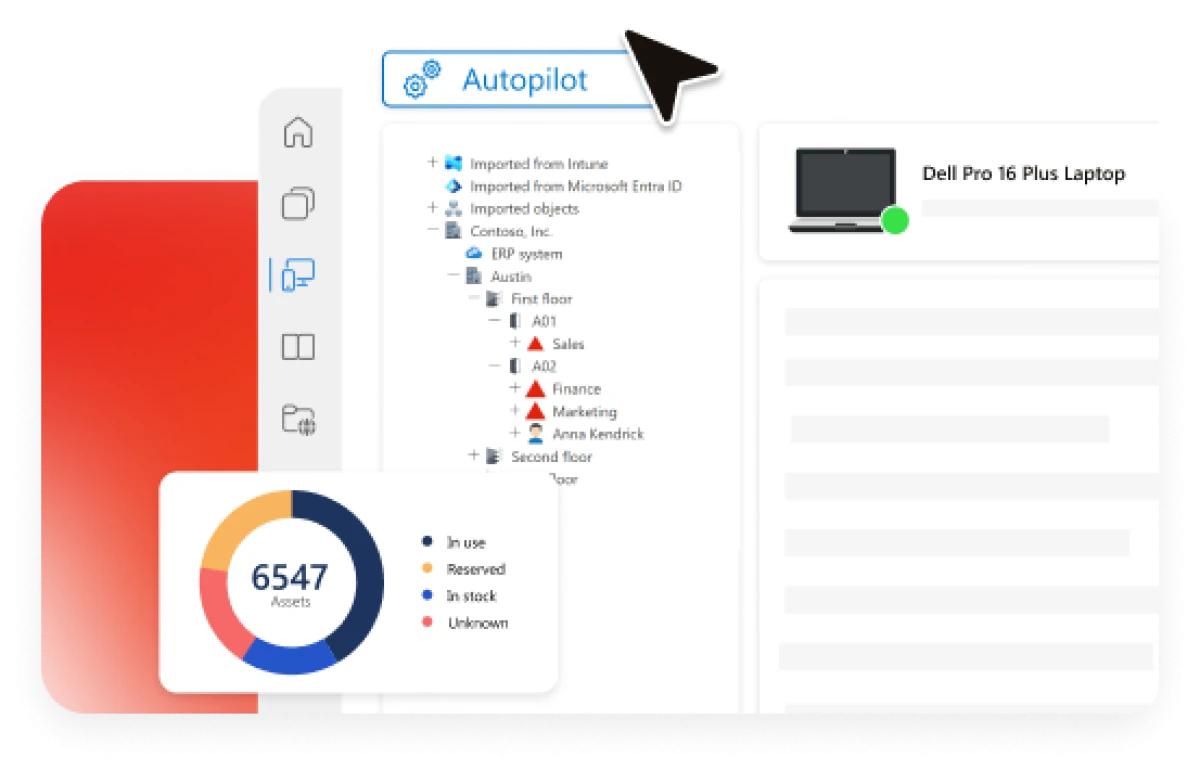
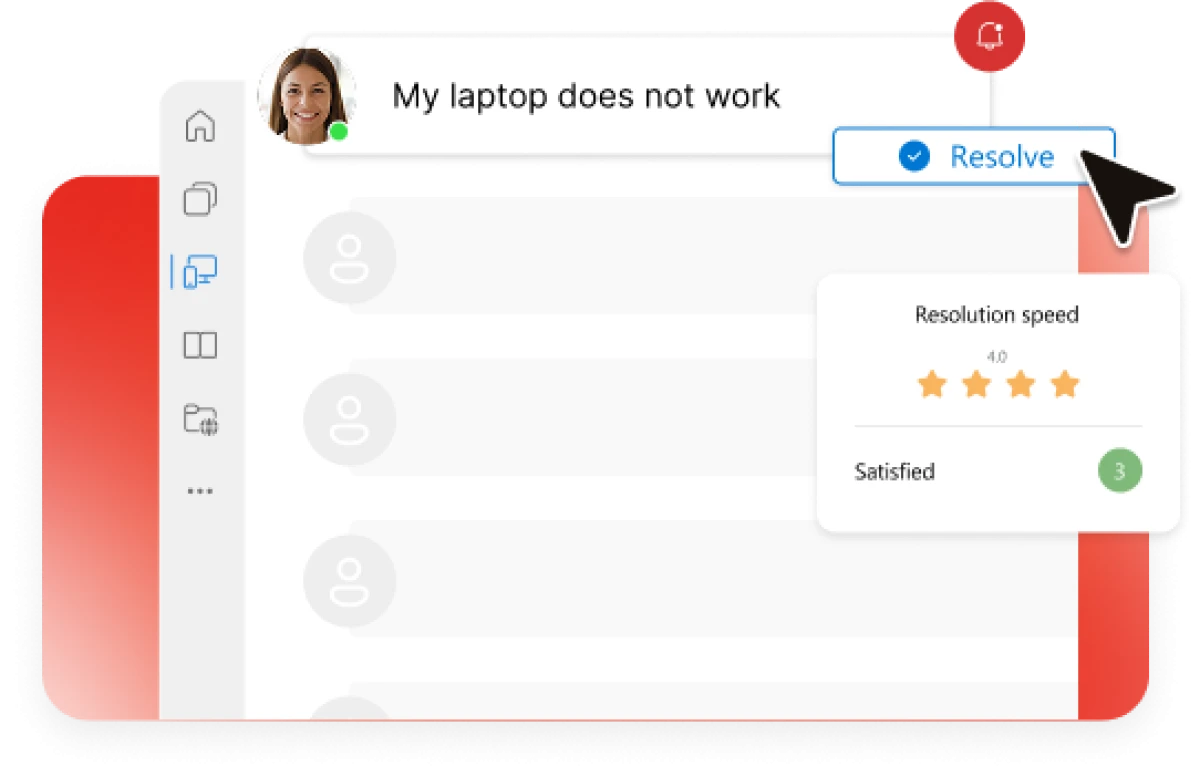
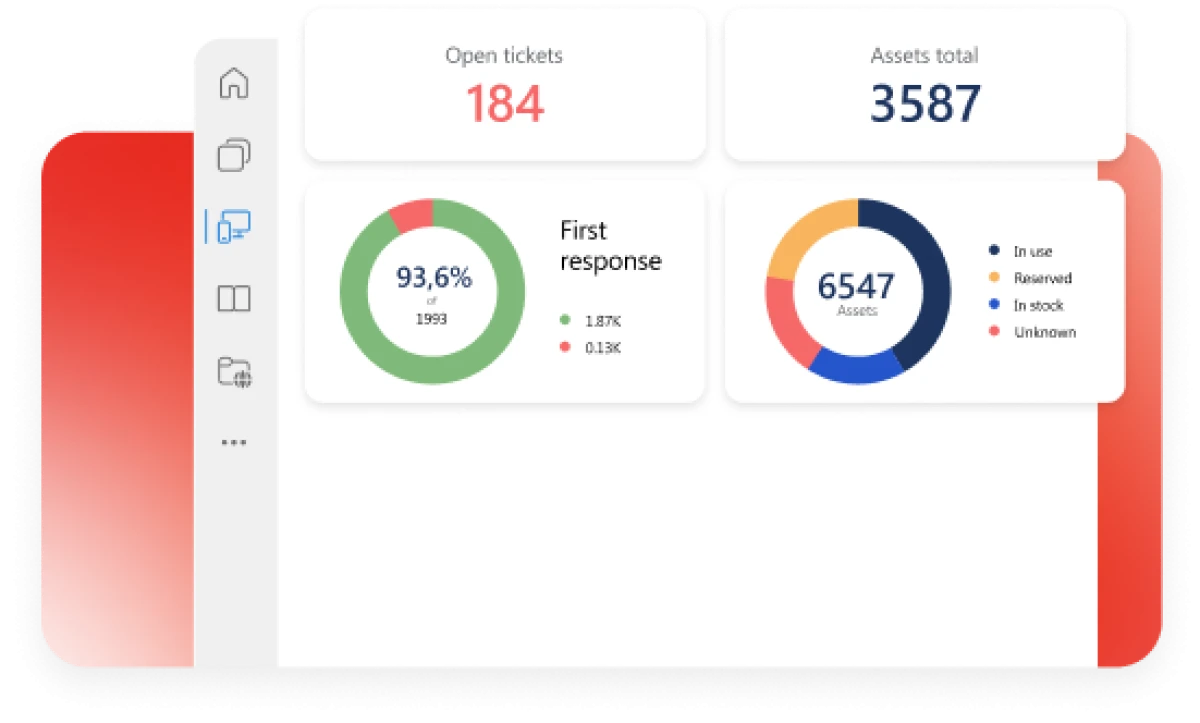
Take control of IT with a single Microsoft‑native ITAM and ITSM solution. Unify assets, requests, and audits.
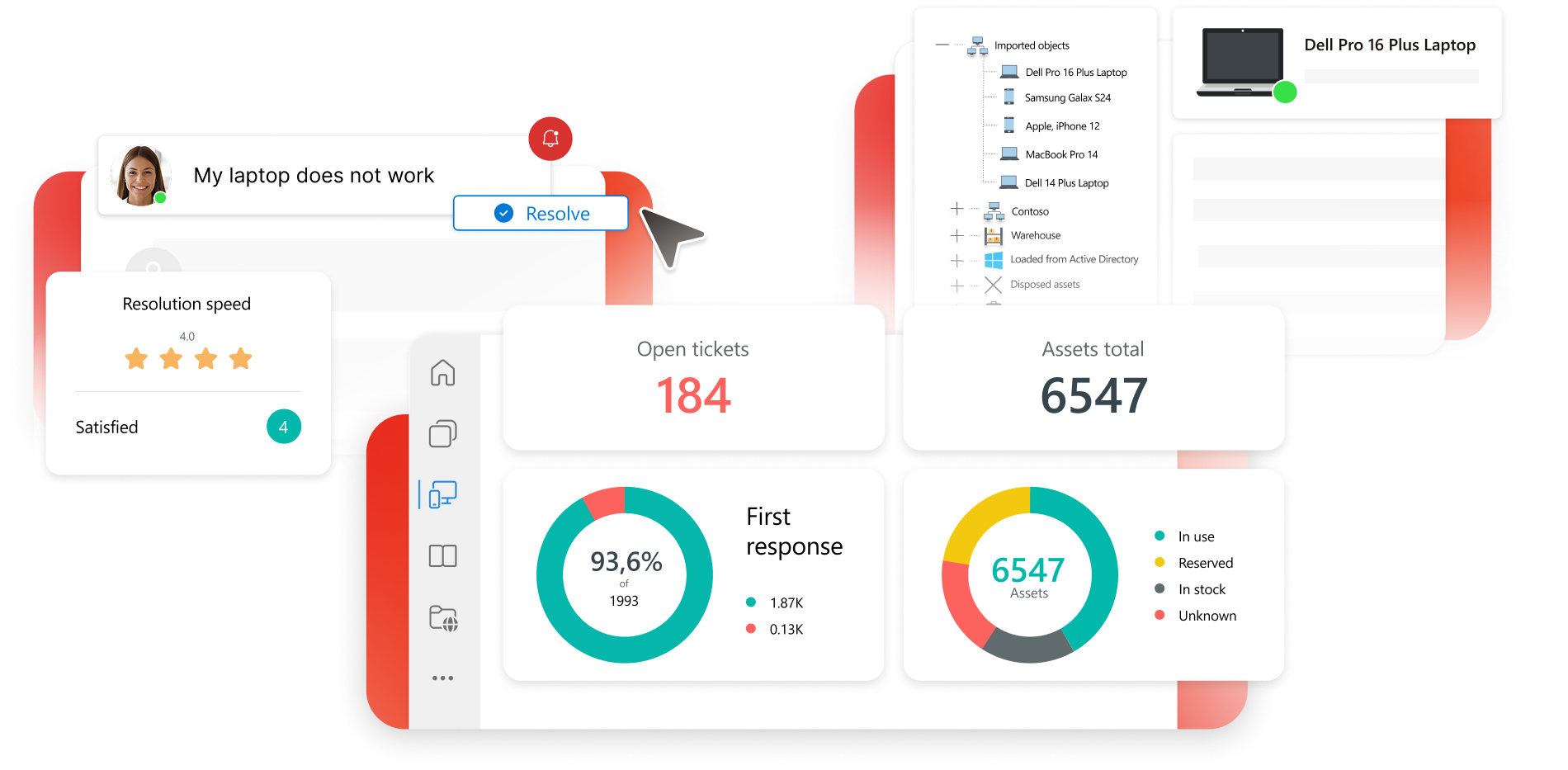



Take control of IT with a single Microsoft‑native ITAM and ITSM solution. Unify assets, requests, and audits.
Powering Microsoft‑first organisations with 300,000+ users across 25+ countries.



Fast to deploy and easy to use. Built for growing teams that need control and security without the enterprise heaviness.


Deploy in days. Automate manual tasks immediately. See measurable savings from day one.


Full ITSM without the complexity you don't need.


A familiar experience for your users. Built on Microsoft technologies you already trust.


Standardize workflows across IT and beyond. Gain more control.


Stay audit-ready for Cyber Essentials, ISO 27001, and more, without the headaches.


Get full visibility into assets, and requests. Know what’s happening at all times.
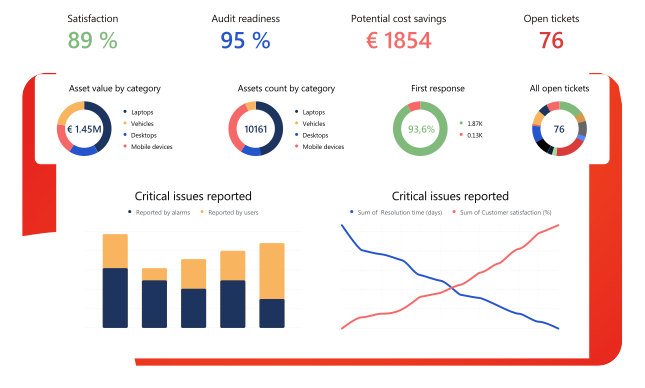

“I like that ALVAO has become our central system for managing service requests and tracking all our assets. Everything is easy to find.”

Eliminate up to 90% of manual, repetitive tasks and give your team the capacity to create real value for your business.
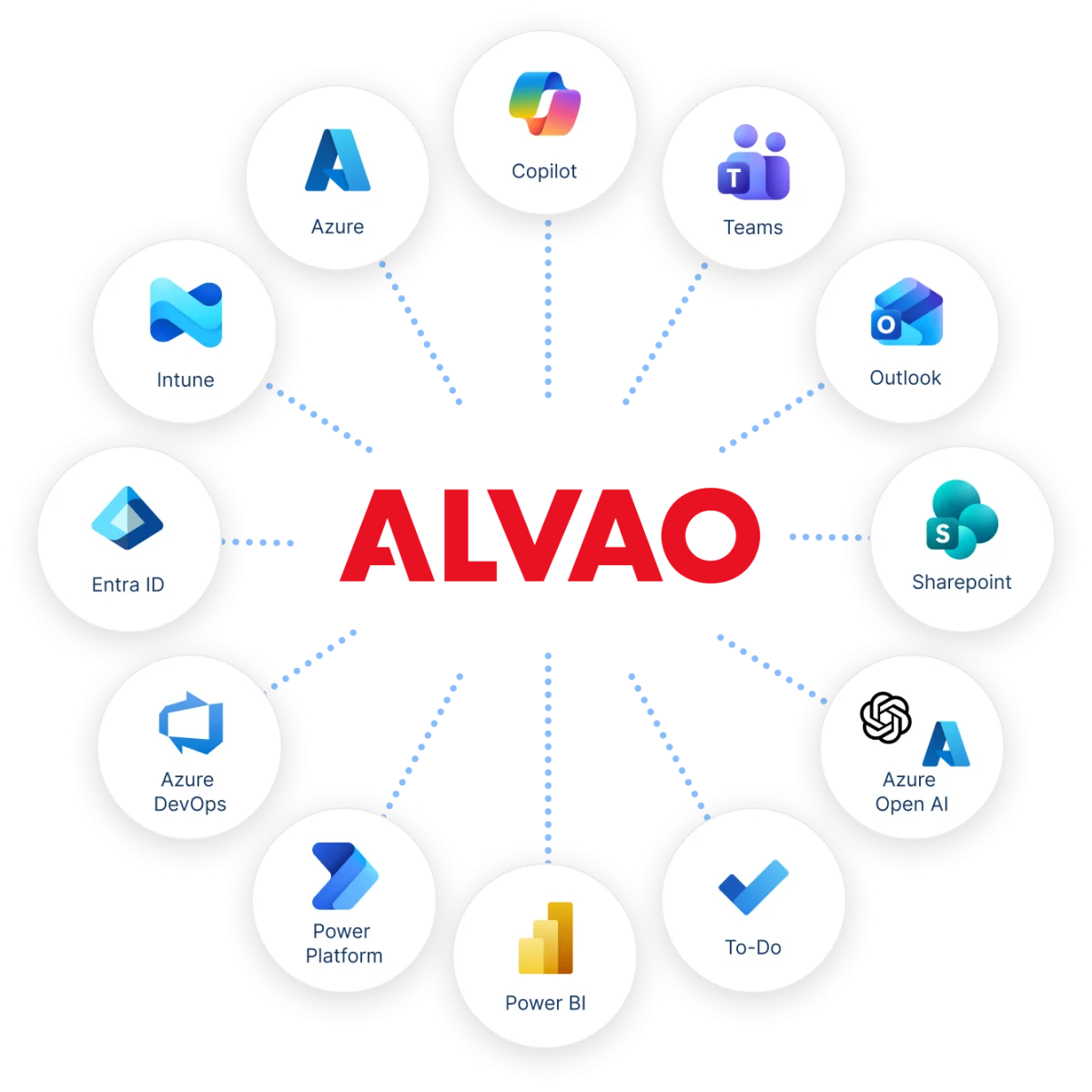
Leverage your Microsoft investment. ALVAO fits into the tools your team already uses, reducing rollout effort and adoption risk.
 Infrastructure
Use your existing Intune and Entra ID setup without parallel systems.
 Automation & data
Automate workflows and reporting with Power Automate and Power BI.
Choose the right setup for your team


“Planning the IT budget is now 80% faster compared to using spreadsheets. I see exactly who has a five-year-old monitor and can plan replacements immediately."


“It’s been an incredible help in our daily operations. We know where everything is, who’s responsible for it, and at which branch it’s located."


“Because the look and feel of ALVAO is very Microsoft-themed, there was a lot of familiarity for our users, making it easier for them to get on board with minimal training."

“A big part of our ISO certification was to have a proper asset management system, and following that, change management. We were lacking change management processes. ALVAO gave us the ability to implement proper change management that met the ISO requirements, but also the needs of Sapio."


“They know that when they submit a ticket, it’s not going into a black hole; it’s actually being worked on."
 No credit card required
 Full access for 30 days
Take our quick test and find out where you stand.
Having a ticketing system and an Asset Management solution as one IT Service Management (ITSM) solution allows you to better anticipate users’ needs and address them in an effective way. IT Asset Management and ticketing are usually closely connected, since most of the incidents have something to do with existing assets. The data gathered from the one, complements the other, which dramatically improves efficiency, clarity of the IT structure, alignment of IT costs with business needs, better use of resources, and less time and money spent on unnecessary purchases.
To choose the best ITSM software for your company you need to have a clear understanding of your needs. Given the wide variety of solutions in today’s market, it can be confusing to select an appropriate ITSM tool. To narrow down the criteria for a new tool you should first understand the maturity of your IT and your ITSM needs and goals. Make sure your solution integrates well with your existing infrastructure. In order to ensure quality, select certified tools from reliable vendors. Since you want your ITSM tool to be adopted by all employees in the company, choose a tool that puts excellent user experience (satisfaction) in the forefront.
The single point of contact (SPOC) is a centralized communication interface between end-users or customers and IT staff or other internal departments. In IT service management, a SPOC streamlines communication by handling all inquiries, issues, and requests, ensuring consistent and efficient service. Instead of figuring out who to contact, users always know where to go. In short: one place for all requests, issues, and questions.
IT Service Management (ITSM) is the discipline focused on managing IT services to deliver business value. While many people associate IT management with overseeing technology, IT Service Management plays an equally crucial role. It emphasizes the value that IT services bring to users and the company as a whole, ensuring that IT not only functions effectively but also aligns with business goals. In essence, IT services are the vehicles through which value is delivered.
Enterprise Service Management (ESM) refers to applying the benefits of IT Service Management (ITSM) to departments outside of IT. The adoption of ITSM in other business teams such as Human Resources or Facility Management can tremendously improve operations, services, and cooperation among teams. ESM serves as a true single point of contact for all employees.
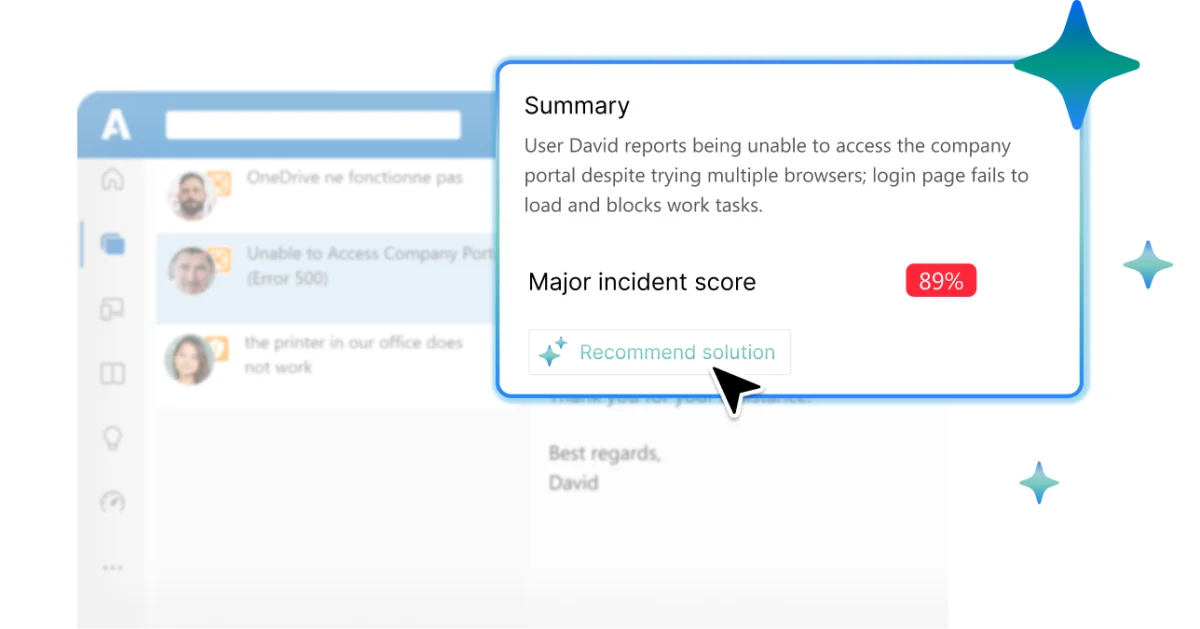
AITSM, or Artificial Intelligence for IT Service Management, uses AI to enhance and automate IT service tasks. It helps in categorizing and prioritizing tickets, suggesting solutions, and even resolving issues automatically. This makes IT service management faster and more efficient, allowing IT staff to focus on more complex tasks.
ITIL stands for Information Technology Infrastructure Library. ITIL is a globally recognized framework that provides a set of best practices for IT service management (ITSM). It helps organizations align their IT services with business needs, ensuring they deliver value to customers. ITIL covers various processes and practices, including incident management, change management, and service configuration management, all aimed at improving the efficiency, effectiveness, and quality of IT services.
A Full Audit Log in ALVAO Service Desk s a comprehensive record of all actions, changes, and events related to a ticket. This log provides a detailed history of ticket activities, such as approvals and decision-making, transparency, and traceability.
The difference between IT Service Management (ITSM) and IT Asset Management (ITAM) is that ITSM encompasses a broad range of practices, while ITAM is a specific practice within ITSM, according to ITIL. Some people may see ITAM as a separate practice from ITSM, but this depends on how you define each. Regardless, ITSM and ITAM are closely related and should work together.
IT Service Management software (ITSM) is built on best practices developed over years, ensuring high-quality service delivery. It provides the exact processes needed to manage IT effectively, improving efficiency and overall service quality.This includes:
Enhance your service desk with built-in AI features that streamline your day-to-day tasks and workflows. ALVAO Service Desk Intelligence allows you to perform powerful image searches within tickets (e.g., screenshots of error messages), conduct smart keyword searches within the platform, and expand chatbot capabilities in Microsoft Teams. Get faster answers, automate technical support, and deliver a better service experience with intelligent automation.
IT Service Management (ITSM) software can be integrated with a multitude of apps by deploying standardized APIs (Application Program Interfaces) such as REST API. APIs help connect up to your existing applications to establish seamless and consistent service delivery. The most common ITSM integrations are with ERPs (Enterprise Resource Planning), CRMs (Customer Relationship Management), HCMs (Human Capital Management), Outlook, Teams, and other security and finance systems.
No matching questions found.